.svg)


Exodus 17:11-14
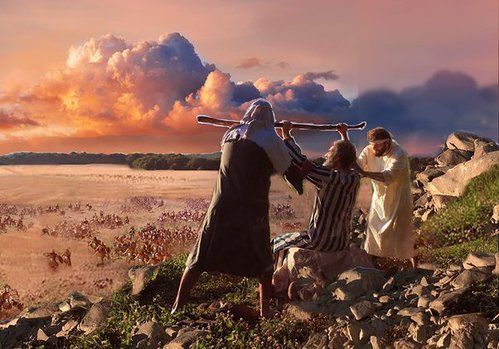
11 As long as Moses held up his hands, the Israelites were winning, but whenever he lowered his hands, the Amalekites were winning. 12 When Moses’ hands grew tired, they took a stone and put it under him and he sat on it. Aaron and Hur held his hands up—one on one side, one on the other—so that his hands remained steady till sunset. 13 So Joshua overcame the Amalekite army with the sword. 14 Then the Lord said to Moses, “Write this on a scroll as something to be remembered and make sure that Joshua hears it, because I will completely blot out the name of Amalek from under heaven.”
Introduction
This passage describes the battle between the Israelites and the Amalekites. Amalek represents both a nation and a nomadic tribe, considered the foremost adversary of ancient Israel. The name "Amalek" can refer to the nation's founder, a grandson of Esau; his descendants, the Amalekites; or the territories of Amalek, which they inhabited. The Amalekites are depicted as having assaulted the Israelites during their escape from Egypt, as recorded in Exodus.
Victory comes from God
The battle against the Amalekites demonstrates that Israel's success was not determined solely by Joshua's military skill and/or the strength of the army. As long as Moses kept his hands raised in dependence upon God, Israel prevailed. When his hands grew weary and fell, the enemy gained the advantage. The victory ultimately came through God's intervention and support. The raising of hands here should be understood as a sign of dependence on God, prayer, or intercession.
The victory over Amalek teaches that while human effort is important, true success comes from God's presence, power, and support. When God's people depend on Him, He grants the strength and victory needed to overcome life's battles.
This being a reality today and forever, what are the key lessons that we can draw from such a packed affirmation, a reality that is remarkably rich and condensed in terms of learning? What is the Holy Spirit of God revealing to us today that can inform our actions, both personally and collectively as the Body of Christ, at the level of organizations, churches, and even at the regional, continental, and global levels?
In other words, what spiritual insights and practical implications should we derive from this experience so that we may better participate in God's mission and respond faithfully to His calling in our generation?
1. No One can succeed alone
Moses was a great leader, but he could not keep his hands raised all day by himself. He needed the help of Aaron and Hur. This teaches that even the strongest leaders need support from others.
Hands Up = Seeking Help
Raising your hands can symbolize asking for help, guidance, or support when needed.
"Strong people are not those who never need help, but those who know when to ask for it."
Moses' hands were held up by two people, Aaron and Hur, one on each side. This image can symbolize that victory required both "them" and "us." No single person or group is sufficient on his/her/its own. God often accomplishes His purposes through united people.
Partnership enables us to accomplish what would be impossible alone.
2. Different People have different roles based on their different gifts/talents
Joshua fought on the battlefield. Moses prayed and interceded on the hill. Aaron and Hur provided support. Each person had a different assignment, yet all were working toward the same goal.
Partnership requires mutual respect.
Aaron and Hur stood side by side, sharing the responsibility equally.
Effective partnership values diverse gifts and responsibilities.
3. Partnership sustains Us in times of weakness or troubles
When Moses grew weary, Aaron and Hur did not criticize him for being tired. Instead, they helped him by providing a stone to sit on and by holding up his hands.
Victory comes when "them" and "us" become "we."
Hands Up = Surrender
Recognizing that some things are beyond your control and entrusting them to God, a higher purpose, or the process of life.
"I have done my best; the rest is in God's hands."
True partners strengthen one another during difficult times.
4. Great Victories are often Team Efforts
The victory is commonly remembered as Israel's triumph under Moses' leadership, yet it involved Joshua's courage and the support of Aaron and Hur. Everyone contributed.
Success is often the result of collective effort rather than individual achievement.
5. God Blesses Unity and Cooperation
The victory came when everyone fulfilled their role and worked together under God's direction.
The theme of unity is here vividly illustrated through the cooperation of Moses, Joshua, Aaron, Hur, and many others, each fulfilling a distinct role in God's mission. Together, they demonstrated that God's work is accomplished not through isolated individuals but through a community united in faith, purpose, and mutual support.
Their partnership became a channel through which God brought victory.
Conclusion
The battle against Amalek teaches that partnership is powerful. Moses needed Aaron and Hur; Joshua needed Moses' support; and Israel needed all of them working together. When people unite around a common purpose and support one another, they become stronger, more effective, and better positioned to experience God's blessing and victory. "Though we are many, we are one body, because we all share in one bread." This affirmation, drawn from the liturgy of Holy Communion and rooted in the Apostle Paul's teaching to the Corinthians (1 Corinthians 10:17), presents a living picture of the unity of the body of Christ.
"When our hands are lifted toward God in faith, prayer, and dependence, His power works on our behalf. Hands up with God is victory."
Rev Felibien Ndintore
Church of the Province of Burundi
1. https://www.churchofengland.org/prayer-and-worship/worship-texts-and-resources/common-worship/churchs-year/holy-week-and-easter-2